The 5am Prove: How a Nassington Pub Learned to Bake Before Lunch
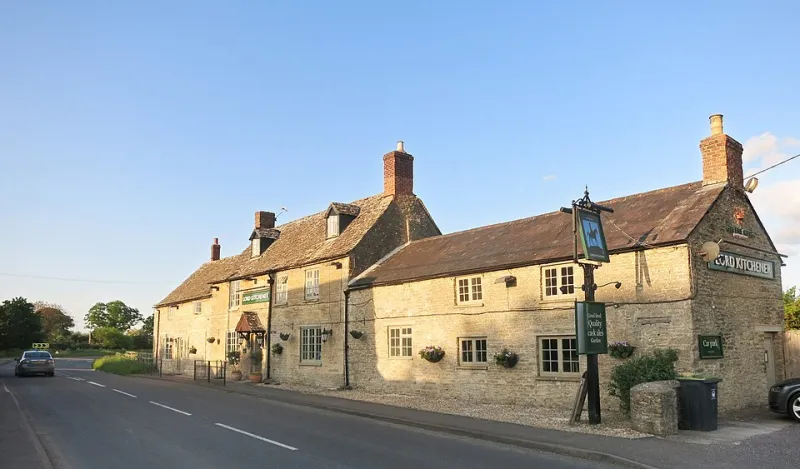
Photo: Des Blenkinsopp , CC BY-SA 2.0, via Wikimedia Commons
It is 8.52 on a cold Tuesday in November, and the Black Horse is not open. Technically. The front door is locked, the fire is unlit and the pumps are asleep. But there is a queue by the side hatch: two dog walkers, a man in a builders' fleece and a woman with a reusable bag that has seen better days. They are not waiting for a pint. They are waiting for bread.
That sentence still sounds odd to some people in Nassington. A pub that bakes? A kitchen that fires up at five in the morning for loaves rather than lunch? But here we are. Since the bread run began, the Black Horse has become a small part of the village's morning rhythm, and the nine o'clock sell-out has become as reliable as the church clock.
The 5am Prove
The baker is Ellie, who normally works the lunch service. At 5am the kitchen is quiet in a way it never is at noon. She mixes the first dough by hand, sets it to prove near the back oven and starts weighing the second batch. The sourdough is the fussy one. The wholemeal tin loaf is the forgiving one. By 7.30 the kitchen smells like a bakery, which is to say it smells like a place you want to stay in.
'The trick is not to overthink it,' she says. 'A pub kitchen is good at batch cooking. Bread is batch cooking with better smells.' By 8.15 the first loaves are out and cooling. By 8.30 the hatch opens. By nine, most of it has gone.
A Loaf Is Not a Pint
A pint is a stay. Bread is an errand. That is the first thing the bread run had to learn. People come to the hatch with a purpose, and often they leave with it. They are not necessarily going to sit by the fire or order a coffee. Some do. Some just want a loaf and a bit of chat.
But a pub can be more than a pub if it does not pretend to be something else. This is not a bakery with a licence. It is a pub that bakes. The lunch board is still short. The pumps still rule the evening. The bread is an extra, not a replacement.
What the Queue Says
Margaret, retired, walks her spaniel past the pub most mornings. She buys the wholemeal. 'It is still warm when I get home,' she says. 'The butter melts before the kettle boils. That is the whole point.'
Dave, in the builders' fleece, is less romantic. 'I would rather spend three quid here than in the supermarket,' he says. 'And I know who made it. That counts for something.'
Priya, with the reusable bag, comes for the seeded loaf and the news. 'It is the only place in the village where you can buy bread and hear about a burst pipe in one trip,' she says. 'That is village life, isn't it?'
The Risk of Being More Than a Pub
There is a risk in all this. A pub that does everything can lose the thing that makes it a pub. The bread cannot become a gimmick. The kitchen cannot start chasing trends at the expense of the lunch it already does well. The morning run has to stay small enough to fit around the rest of the day. One baker. Two ovens. A hatch. A sign.
That is why the bread run works. It is not a new identity. It is a new habit. It gives the village a reason to walk to the pub before noon, and it gives the pub a reason to open its kitchen when the rest of the building is still asleep. In 2026, that feels like a small, useful kind of magic. On a cold morning, a warm loaf is not just food. It is a small argument for leaving the house.
Nine O'Clock, Sold Out
At 8.58 the last seeded loaf goes. Ellie puts a handwritten sign on the hatch: 'Back tomorrow, 8.30.' The dog walkers drift off. The builder heads to his van. Priya goes home with bread and a story about a burst pipe. The pub goes back to being a pub.
The fires will be lit at 11. The first pint will be pulled at noon. The lunch board will go up. But the morning has already done its job. It has fed the village and reminded it that the Black Horse is not just a place to sit in the evening. It is a place that opens early for bread, and later for everything else.