A Peg for Your Coat, a Place for Your Name: The Quiet Trust of a Village Pub
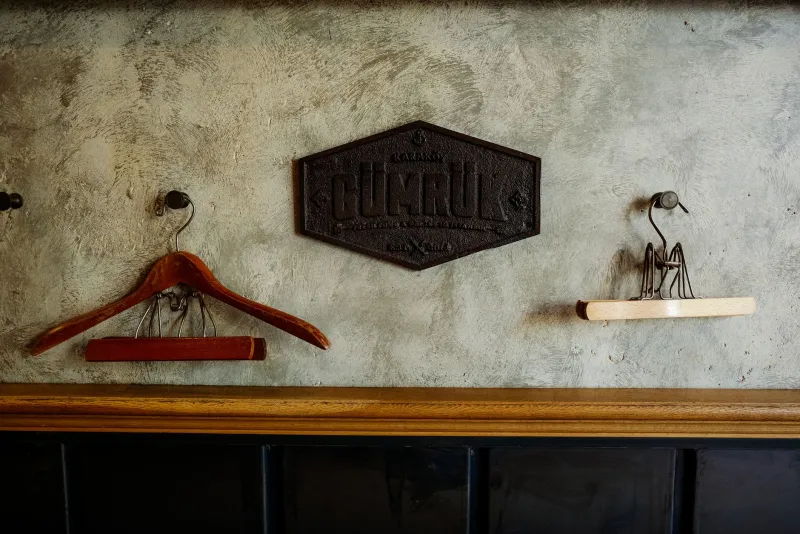
There is a wall at the back of the Black Horse that never appears on the menu. It has no chalk, no specials board, no neatly lettered list of local suppliers. It is simply a run of hooks — some brass, some darker with age, one or two slightly bent — and on a wet November morning it is doing a quiet sort of business. A waxed jacket hangs beside a dog lead. A folded copy of the newspaper is wedged behind a scarf. A flat cap sits on a peg as if it has been there since the last cold snap and has no intention of moving.
No one has written a ticket. No one has asked for a deposit. The coat hook economy runs on something less formal and far more useful: the assumption that people will come back, and that their things will still be there when they do.
The Quiet Infrastructure of a Back Wall
Pubs talk a great deal about atmosphere. Usually they mean the lighting, the fire, the low hum of conversation. But atmosphere is also made of small practical things — a dry place for a wet coat, a hook low enough for a dog lead, a ledge where a pair of reading glasses can be set down without being swept into a lost-property box. At the Black Horse, the back wall is part of the furniture in the truest sense. It is used, not styled.
Ask behind the bar and staff will tell you the hooks have their own rhythm. Winter fills them. Summer thins them out. Saturday lunchtime brings a row of padded jackets and a tangle of leads; a quiet Tuesday might have only a single raincoat and a canvas shopping bag. The wall reads the village the way a rain gauge reads the weather. It is not a formal record, but it is an honest one.
What Gets Left Behind
A coat left on a hook is a small statement of intent. It says: I am here, I am staying for one, and I will be back for the coat. It is also a statement of trust. In a town centre, an unattended bag might be viewed with suspicion. In a village pub, an unattended coat is simply a coat. The distinction matters. It is not naivety; it is familiarity. The person on the next stool probably knows whose jacket that is, or knows someone who does.
The same goes for dog leads. Nassington is a walking village, and a lead on a hook often means the dog is under the table, the owner is at the bar, and the walk home is already half-planned. Folded newspapers are another fixture. A regular may leave one for a friend, or simply abandon it on a peg because the crossword was finished and the fire was too good to leave. These are not lost items. They are evidence of people moving through a shared space without having to guard every possession.
The Stories in the Brass
Some of the hooks look older than the current carpet. One has a bent brass neck that catches the light when the door opens. Another sits slightly higher, presumably for a taller regular or a shorter coat. Staff will tell you that hooks acquire histories. A particular peg becomes ‘so-and-so’s hook’ without anyone formally awarding it. If someone else uses it, no one makes a fuss, but there is a mild, unspoken adjustment when the usual owner arrives. The coat moves along. The peg is restored. Village life is full of these tiny protocols.
There is also a practical generosity to the wall. Visitors from outside the village use the hooks too, and no one asks them to prove they are local. That is part of the point. A pub that only made sense to people who already knew it would not be much of a pub. The hooks are a small welcome: put your coat down, stay a while, you are not in the way.
Trust Has a Shape, and It Is Usually a Bent Hook
It is tempting to measure a pub by its reviews, its specials board or the line on the chalkboard about locally sourced this and seasonally inspired that. Those things matter, but they are also performative. They are meant to be read. The coat hooks are not meant to be read. They are meant to be used. And that is exactly why they are a better measure of a pub’s place in a village.
An unclaimed coat tells you that someone felt comfortable enough to leave it. A dog lead left hanging tells you that the pub is part of a walk, not just a destination. A newspaper folded on a peg tells you that time is allowed to pass here without anyone trying to sell you something. These are small things, but they add up to a kind of social infrastructure. The coat hook economy is not about money. It is about repeat visits, low-level trust and the comfortable assumption that the village will still be there tomorrow.
A Small Custom With a Long Memory
On a wet November day, the back wall at the Black Horse is doing more than keeping coats dry. It is keeping the village’s habits in place. It is reminding us that a proper local is not built only from seasonal plates and local pints, though those help. It is built from the everyday permission to leave something behind and know it will be safe.
So next time you hang your coat on a peg and wander to the bar, notice the wall. Notice the leads, the scarves, the folded paper, the slightly bent hook that belongs to someone whose name you may never learn. It is a modest thing. But in a village, modest things tend to last. And an unclaimed coat, hanging quietly until its owner returns, may be the most honest review the Black Horse will ever get.