The Gravy Bell: How Sunday Lunch in Nassington Keeps Village Time
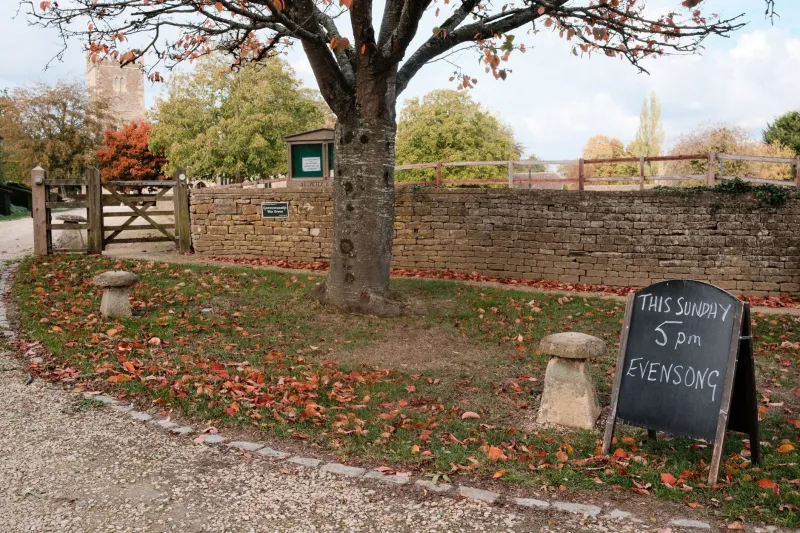
On a Sunday in Nassington, the first sign that lunch is coming isn’t the smell of roasting meat. It’s the bells. They ring out over the rooftops, across the allotments and down towards the river, and somewhere between the second peal and the last, the village starts to think about gravy.
That’s not a romantic notion. It’s a practical one. Sunday at the Black Horse has never been run by the clock on the wall. It follows the rhythm of St Peter’s bells, the pattern of families walking up Church Street, dog-walkers coming back from the Nene Way, and the kitchen’s own quiet countdown to the first tray of Yorkshire puddings. If you want to understand when to arrive for Sunday lunch here, it helps to listen rather than look at your watch.
The First Bell: When the Village Starts to Stir
The first bells are for the church, not the carvery. But they do the same job for the pub: they mark the point when the village lifts its head. Curtains open. Boots are pulled on. Someone remembers they promised to ring, and someone else remembers they promised to collect the grandparents.
In the Black Horse kitchen, the first bell is a nudge rather than a starting gun. The beef is already in. The pork has been scored and salted. The vegetables are prepped, the gravy base is on a low heat, and the first batch of Yorkshires is resting. Nothing is rushed at this point — that comes later — but everything is pointed in the same direction.
The bell-ringers do their work; the kitchen does its own. And between them, a Sunday begins to take shape.
The Pint Before the Plate
By the time the service is underway, the Black Horse is opening its doors. The first pints land on the bar about midday, often before the first roasts leave the pass. That order matters. Sunday lunch here is not a sprint to the table; it is a pint, a look at the chalkboard, a conversation with someone you haven’t seen since Thursday, and then the business of deciding between beef and pork.
You can spot the regulars by their timing. The early table of grandparents arrives just after twelve, orders a half between them and settles in. The young family with the buggy comes next, usually with one eye on the roast and one eye on the door. The couple who walked over from Woodnewton or Apethorpe arrive a little later, mud on their boots, asking what’s still available before they even take their coats off.
There is no single right moment. There is only the moment that suits your Sunday. But if you want the full noise of a village lunch — the clatter of cutlery, the low hum of talk, the occasional cheer from the bar — come around one.
The Gravy Bell: Timing the Roast
The kitchen works backwards from the bells, not forwards from the clock. That sounds like a small distinction. In practice, it changes everything.
A roast is not a single dish; it is a sequence. The meat needs resting. The potatoes need their moment in hot fat. The crackling needs watching, not hoping. The Yorkshires are made in batches, not mountains, because a Yorkshire that has waited under a lamp is not the same Yorkshire that has just come out of the oven. And gravy is the last thing to be hurried and the first thing to be noticed.
The second bell, then, is the kitchen’s cue to move from preparation to service. The first carvings are usually the crispest. The first plates are usually the quietest. The first crackling rarely lasts long. If that is your aim, arrive early and order it plainly. It is not a secret, but it is a timing exercise.
If you want a calmer table, come after one. The first rush has settled, the bar has a little more room, and the kitchen has found its rhythm. If you are later still, ask what is left rather than what is on. That is not a disappointment; it is simply how a proper Sunday works.
A Table, a Ledge and the Last of the Crackling
Sunday lunch at the Black Horse is not a production line. Some tables are booked, some are kept for walk-ins, and some are filled by people who popped in for a pint and stayed for the pork. The best guide is not a timetable but a habit: arrive when you are hungry, order when you are ready, and do not treat the last of the crackling as a myth. It is real, and it goes quickly.
The clock on the wall is there for the staff. The village keeps its own time. The bells ring, the doors open, the gravy comes out, and for a couple of hours on a Sunday, Nassington eats when the bells say so — not because it is old-fashioned, but because it works.