Six Miles, Four Pints: Reading the Bar by the Distance It Travelled
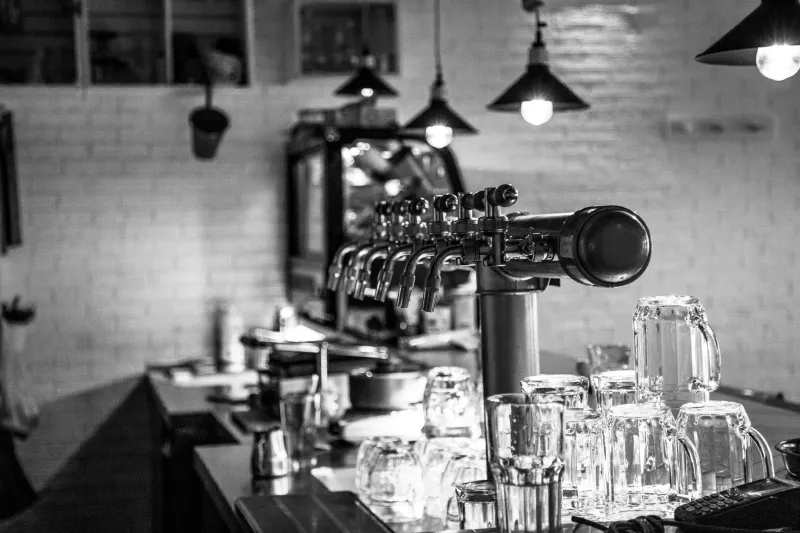
Standing at the bar with a pint in front of you, it is easy to forget that the glass has a postcode history. The phrase 'local pints' gets used in every village in England and it usually means very little — a brewery in the same county, a van that did not have to join a motorway. We would rather it meant something you could actually measure. So we did the slightly daft thing and worked out, roughly, how far everything on the bar has travelled to reach Nassington. Road miles, from the brewery gate to our cellar door, give or take a wrong turn near Elton.
This is not a leaderboard. Nearest is not automatically best and furthest is not automatically a scandal. It is a map, and maps are useful for the same reason beer lists are: they tell you where you are.
The near circle: five or six miles
The shortest journey on the bar belongs to Digfield Ales at Barnwell — five miles if you take the pretty route, which you should. There is something quietly pleasing about a brewery you could walk to and still have the energy for a pint at the other end. What arrives is a proper village bitter: biscuit and a bit of toffee, a dry finish that makes a second pint seem like a sensible plan rather than indulgence.
Just behind it, Nene Valley Brewery over in Oundle, about six miles. Their pales do most of the heavy lifting through the warmer months; come the cold, something darker tends to find its way onto the board.
The advantage here is not sentiment, it is freshness. Beer is a fresh product. Cask beer especially. It does not improve sitting in a van, and it certainly does not improve sitting in a cellar waiting for someone to fancy it. The shorter the gap between the mash tun and your glass, the less the beer has had to survive on the way.
The county ring: ten to fifteen miles
Oakham Ales in Peterborough, call it eleven miles. If you have drunk in the East Midlands at all, you have met their hops — the green, citrus-forward pales that made a Peterborough brewery famous well beyond Peterborough. It is a good benchmark pint: reliable, bright, the sort of thing that suits a Saturday lunch.
Then Great Oakley, out Corby way, roughly fourteen miles. Their darker beers are what we lean on when the clocks go back — a mild with a bit of chocolate to it, low enough in strength that a second one is not a decision you regret on the walk home.
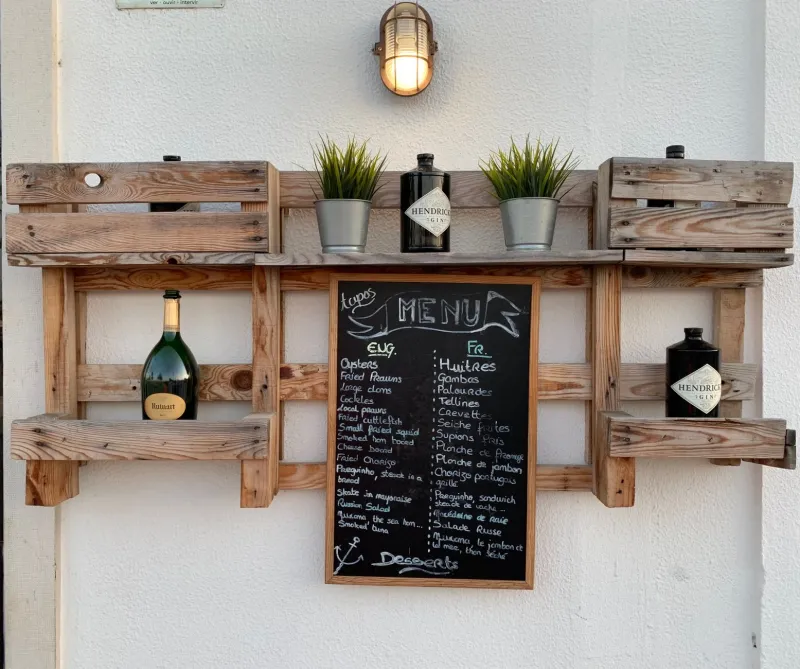
Somewhere in this ring you also find the gins worth talking about, the small distillery stuff with juniper at the front rather than sugar. Ask behind the bar; the list moves.
The far shelf: thirty miles and out
Phipps NBC in Northampton sits around thirty miles away, and they have a history that goes back considerably further than our furniture. Towcester Mill, thirty-five or so, is worth a mention for doing something difficult very well: brewing at a proper small scale in a building that was never designed for it.
And then there is cider, which is the honest exception to the whole exercise. Good cider comes from orchards, and orchards are where they are. Aspall in Suffolk, Westons in Herefordshire — that is seventy miles and a hundred and ten, and we would not swap either for a nearer bottle that tastes of less. Apples do not like being hurried, and cider rewards patience in a way that beer rarely can.
Whisky, obviously, is not local, and we do not pretend otherwise. Some things are worth the miles.
What the miles do not tell you
Here is the part most local-drinks talk skips. Almost nothing on this bar has travelled zero miles, and that is fine. The malt comes from malting barley grown on flatter land than ours. The hops come from Kent, or Germany, or further. A pint brewed five miles away has still been on a lorry, and the barley in it has seen more of the country than most of us will this year.
So local is not a purity test. It is a series of small, practical decisions: shorten the last leg, keep the money moving around the parish and the towns either side of it, and get the beer into your glass while it has still got something to say. That is the whole argument. It is not romantic, it is just logistics with better company.
The board moves with the weather
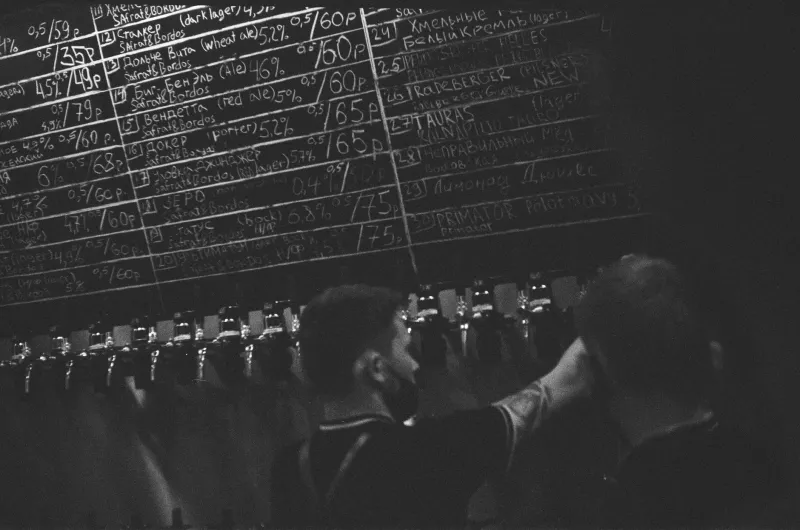
Guest lines rotate, which means the map redraws itself every few weeks. In November expect the dark mild, a porter, maybe something with a bit of smoke about it. By May the board has swung back to pales and goldens, and the gins come out of hibernation with a slice of something sharp.
If you come in and the beer you loved last month has gone, that is not carelessness. A rotating board is a moving map, and moving maps are more interesting than the ones printed on a beer mat.
The last mile
The shortest distance on our list is the one you walk home, and it is the only one we would genuinely encourage you to keep short. Five minutes to the green, ten to the far end of the village, fifteen if you take the long way and stop to look at the stars.
Order the pint that travelled six miles. Order the cider that travelled a hundred and ten. But leave the car on the drive either way. That is the only measurement on the board that really counts.