The Other Side of the Bar: Building a No-and-Low Shelf Worth Choosing in Nassington
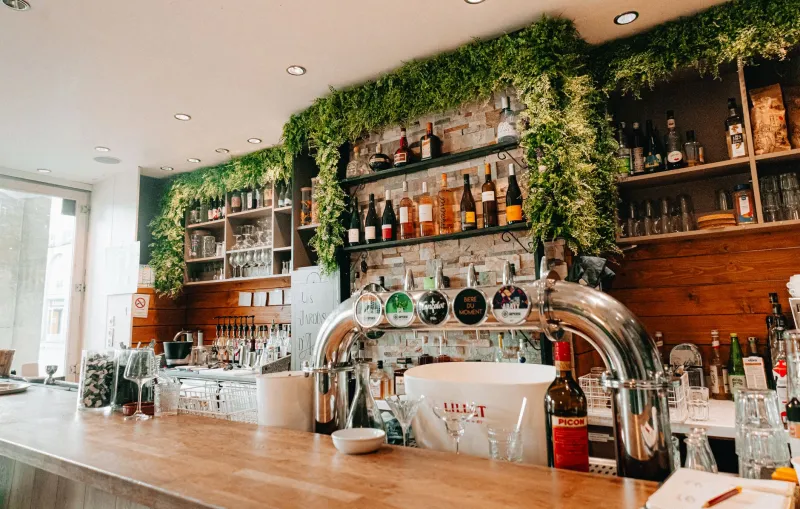
There is a particular look that crosses a person’s face when they ask what alcohol-free options there are and the answer is a single dusty bottle at the end of the bar. It is not annoyance, exactly. It is more the expression of someone who has just been told the village bus stops at four o’clock. Disappointed, but not surprised.
At the Black Horse, we would rather avoid that look. The no-and-low shelf is not a bin for good intentions. It is a proper part of the bar, with its own logic, its own tasting notes and its own place beside the cask ales. In 2026, that feels less like a trend and more like basic hospitality.
More Than a Placeholder
The designated driver is the obvious person to think about, but they are not the only one. There is the chap who has had a long week and wants the ritual of a pint without the third unit. There is the visitor walking the Nene loop who fancies something cold and grown-up at the end of it. There is the January abstainer who is not abstaining from company. And there is the simply pint-curious, who might order a low-alcohol beer because it sounds interesting, not because they are making a point.
None of those people want a lecture. They want a drink that has been chosen, not merely stocked. That is the difference between a shelf that says “we have to” and one that says “we thought about it”.
Tasting, Not Ticking Boxes
The first rule of a decent no-and-low range is that it has to taste of something. Alcohol-free beer has come a long way from the thin, slightly sweet versions that once made people pull a face. The best of them now have proper malt character, a bit of bite and a finish that does not vanish instantly. Pale ales can be citrusy and crisp. Darker options can carry roasted notes without becoming heavy. Alcohol-free cider can be dry and apple-forward rather than syrupy.
We taste them the same way we taste a new cask: is it balanced, is it refreshing, would we happily drink a second? If the answer is no, it does not go on the shelf. That sounds obvious, but it is surprising how often no-and-low drinks are bought by the box rather than by the glass.
Spirits and aperitifs deserve the same scrutiny. A good alcohol-free gin alternative should not taste like a chemistry experiment; it should work with tonic, a wedge of orange and a bit of ice. A low-alcohol aperitif can be a genuinely nice thing before Sunday lunch, especially when the alternative is another cup of tea.
What Works With Dinner
Food pairing is where the no-and-low shelf becomes more than a consolation prize. A crisp alcohol-free pale ale sits nicely with fish and chips, cutting through the batter. A darker, maltier option can handle a pie or a plate of sausages. Dry alcohol-free cider is a natural partner for pork, cheese or anything with a bit of apple in it. A light alcohol-free spritz works before the meal, when the kitchen is still clattering and the table is still filling up.
We are not trying to recreate a wine list in miniature. The point is simpler: if someone is not drinking alcohol, their meal should not become a matter of tap water and good intentions. The drink in their hand should be part of the evening, not an apology for it.
The Practical Cellar
There are practical realities to stocking a no-and-low range in a village pub. Shelf space is finite. Alcohol-free beer is best fresh, so it does not want to sit at the back of a storeroom for six months. Some products are expensive for what they are. Some are brilliant but only in small quantities. And there is always the risk of buying a case of something that seemed like a good idea in the wholesaler’s catalogue and then tastes like a wet cardboard box.
So we keep it tight. A few beers, a cider, a spirit alternative or two, and a couple of soft drinks that are actually worth drinking. We rotate when something better comes along. We listen when someone asks for a particular thing. And we do not hide the range at the bottom of a fridge or behind the ketchup. If it is good enough to stock, it is good enough to see.
A Seat at the Bar
The best thing about a proper no-and-low shelf is not the drinks themselves. It is the way it changes the question. Instead of “What can I have?” it becomes “What would you like?” That is a small shift, but it matters. It means the driver is not counting down the minutes until they can leave. It means the abstainer is not nursing a lime and soda while everyone else gets the good glasses. It means the village pub is doing what a village pub should do: making room for everyone at the bar.
So the second tap is not a novelty. It is not a box-ticking exercise, and it is certainly not a lecture. It is just another part of the Black Horse, chosen with care and served without fuss. And if you are the one driving home, or the one taking a night off, or the one who simply fancies trying something different, there is something on the shelf for you.