A Glut Is a Gift: Nassington's Spare Produce Finds the Specials Board
The box by the back door
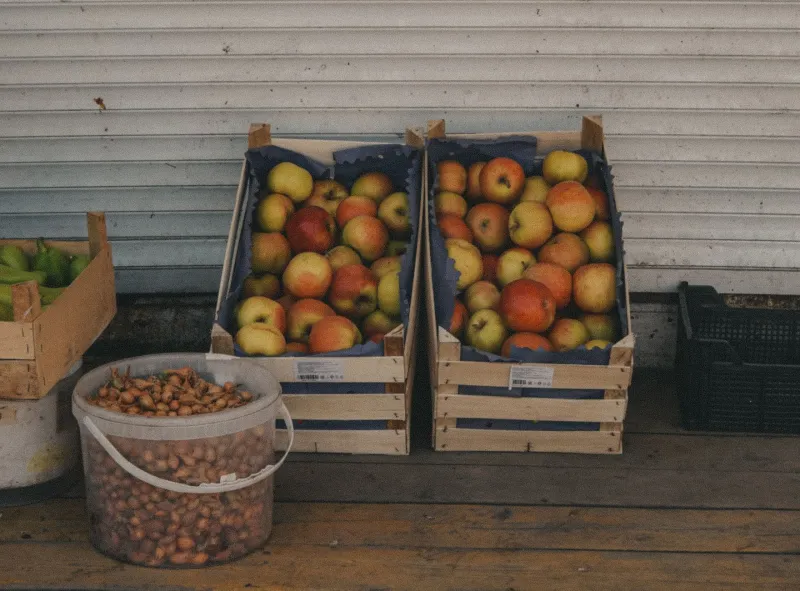
Something quietly useful happens at the Black Horse most weeks in autumn. A grower from Nassington or one of the neighbouring villages turns up with a box that is too good to compost and too much for one household: a few pounds of parsnips, a bag of apples, maybe a glut of courgettes from a late plant, or a bunch of herbs that has run riot. It is not a delivery in the usual sense. There is no order form, no pallet, no schedule. Just a neighbour, a crate and a question along the lines of: could the kitchen do something with these?
That question is the whole arrangement. The pub calls it the borrowed larder, though nobody has printed a policy. The kitchen takes what it can use, checks it over, and plans a short-run special around it. The grower gets a pint, a thank you, or simply the satisfaction of seeing their surplus leave the kitchen door as something people are eating. Sometimes there is a small arrangement in return; sometimes it is a straight gift. The details vary because the people vary. It is a village system, not a procurement strategy.
Why a pub can make this work
A formal supply chain wants consistency. It wants the same box, the same size, the same week, the same paperwork. A village pub with a small menu can work the other way round. It can look at what has arrived and ask what suits the board today. That flexibility is not a gimmick; it is one of the quiet advantages of cooking in a place where the menu is already short and the kitchen knows its regulars.
There is also a practical gain. A glut is a problem for a gardener. Four marrows, three carrier bags of apples or a row of parsnips that all come ready at once can be hard work to shift. The pub has plates, people and a reason to use them up. The borrowed larder turns surplus into a few portions of something interesting, rather than a heap on the compost. It also gives the menu a local story without turning the whole thing into a lecture. Nobody needs a diagram of food miles with their lunch.
In late autumn, the borrowed larder tends to shift from green to earthy. There are apples from storage, the last courgettes, bunches of parsley and thyme, and parsnips that have had a touch of cold. That is the point where the specials board becomes useful. A parsnip and apple soup can use both the sweetness of stored fruit and the nutty edge of roots. Roasted parsnips with a little honey and mustard make a good side for a pie or a plate of sausages. Apples can become a chutney or a compote. Herbs can go into dumplings, stuffing or a green sauce. A late courgette can be grated into fritters or a chutney if the kitchen has the time. None of it is fancy. It is just cooking with what is there.
The short-run special
The key word is short-run. A borrowed-larder dish is not meant to be a permanent fixture. It appears, it sells, it goes. That suits the pub and it suits the grower. It also keeps the board honest. If the parsnips run out, the dish comes off. If the apples are especially good, the kitchen might stretch them over a few days. If a box of herbs arrives on a Thursday, the weekend menu can use them. There is no promise of forever, which is a relief in a world of laminated menus.
This is also why the arrangement suits Nassington better than a formal supply chain would. The village is small enough that people know who grows what. The distances are short. The quantities are modest. The kitchen can say yes to a crate without wondering whether it can fill a lorry. And the pub can be a useful middle point between garden and plate, without pretending to be a shop.
There are limits, of course. The kitchen has to be sensible. Produce is checked, washed and used quickly. A glut is not a licence to serve anything that comes through the door. But the principle is sound: use what is good, use it soon, and do not overcomplicate it.
What lands on the board
The late-autumn version of the borrowed larder is probably the most satisfying. It is the season of roots, stored fruit and herbs that have survived the first cold snap. A bowl of parsnip and apple soup, with a swirl of cream and a piece of bread, is a good example of what the arrangement can produce. So is a plate of roasted roots with a spoonful of apple chutney, or a simple herb dumpling floating in a stew. If someone brings in the last courgettes, they might become a fritter with a yoghurt and herb dip. If there is a glut of apples, a crumble is almost inevitable.
The point is not to make a performance of thrift. It is to let the village feed the pub a little, and let the pub feed the village back. The borrowed larder is a small idea, but it fits the place. It keeps the menu moving, it makes use of good food, and it gives the chalkboard a reason to change. In Nassington, that feels about right.